Claude Code Team Memory: CLAUDE.md, Git, or MCP?
Three common ways to give Claude Code shared team memory — a CLAUDE.md file, Git itself, and an MCP memory server. What each is good at, and where the boundary sits.
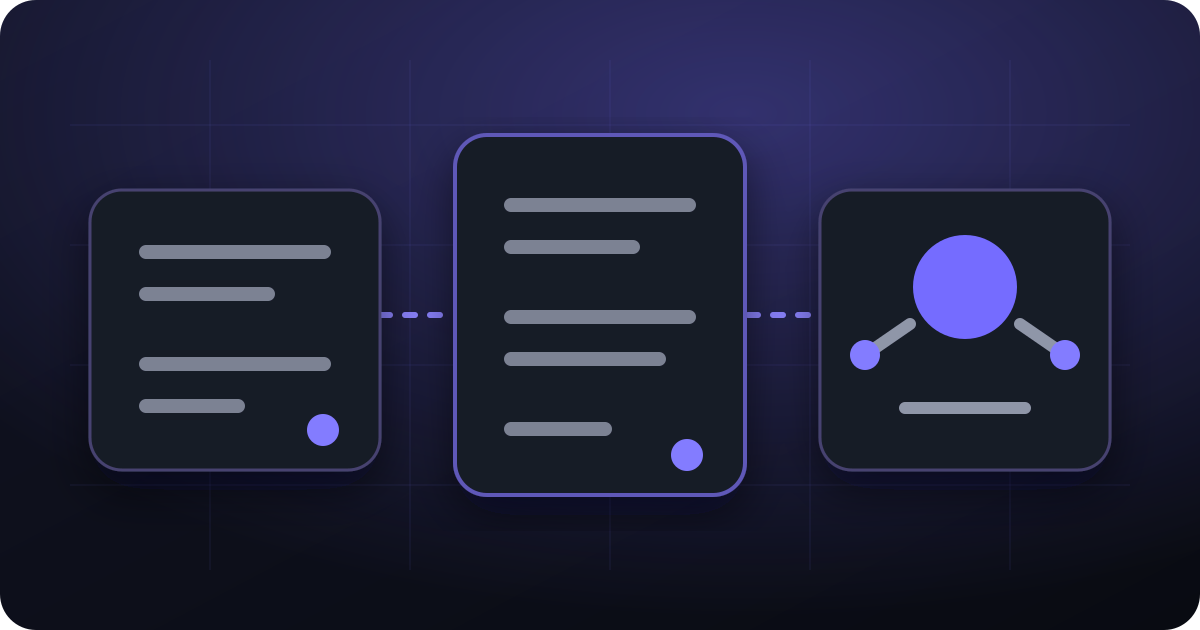
If a team wants its Claude Code agents to remember decisions and context, three tools come up: a CLAUDE.md file, Git itself, and an MCP memory server. They're often framed as competitors. They're not — they cover different layers. Here's the boundary.
CLAUDE.md: standing instructions, per repo
CLAUDE.md is a file Claude Code reads automatically. It's the right home for stable, repo-scoped conventions: coding style, architecture notes, "run the tests with this command," "money is integer cents."
Good at: durable rules that rarely change; zero setup; versioned with the code.
Where it stops: it's static and per-repo. It's a poor fit for "what did we decide this morning," which changes daily, and it doesn't cross repos or capture a decision at the moment an agent makes one. It also doesn't help two agents avoid editing the same file right now.
Git: the source of truth for code
Git already stores your code and its history, and commit messages/PRs explain why a change happened. Some teams try to extend this into a shared "memory" — a Markdown vault or changelog committed to a repo.
Good at: it is, and should remain, the canonical record of the code itself. Attribution and history come for free.
Where it stops: most coordination context has no diff to attach to — "don't touch this module yet," "we're standardizing on X," "who's working on payments." Pushing that into Git turns coordination into a file that has to be pulled, merged, and resolved. Merge conflicts are exactly the thing you're trying to avoid, and a committed vault reintroduces them. Git is also poll-based: an agent only sees an update after a fetch, not the moment it's written.
MCP memory: the working context around the code
An MCP memory server gives agents a small shared store they read and write through tools, live, across sessions and machines. MCP is an open standard for connecting AI applications to external systems. This is the layer for the decisions and context that never make it into a commit — and, in some tools, for coordination primitives like file claims and a task board.
Good at: capturing a decision the instant an agent makes it; serving it to a different agent on a different machine on connect; staying vendor-neutral (any MCP client — Claude Code, Cursor, Codex).
Where it stops: it is not your code store. It shouldn't try to be Git, and a good one won't fetch or clone your repositories.
The boundary, in one line
- Git is the source of truth for code.
CLAUDE.mdholds stable, per-repo instructions.- MCP memory holds the live, cross-machine decisions and coordination around the code.
They compose. Keep code in Git, keep conventions in CLAUDE.md, and put the fast-moving team context — "we decided v2," "carol holds payments," "is the API frozen?" — in a shared MCP layer where every agent can read and write it.
How Vibsync fits
Vibsync is that MCP layer: durable team memory (remember / recall), async agent-to-agent Q&A (ask / reply), and file-claim + task coordination — one endpoint, vendor-neutral, bring your own model. It deliberately does not ingest your source; Git stays the source of truth. A decision one agent records is inherited by a fresh session on another machine, without anyone copy-pasting context.
If your team keeps re-explaining the same decisions to new Claude Code sessions, that's the gap this layer fills. Try it free during beta — point your agent at mcp.vibsync.com/mcp.
Disclosure: this comparison is written by the Vibsync team. Vibsync is built by LOOSEDAYS Co., Ltd.